
The Marathon Jetset: Why Your Travel Fit Matters as Much as Your Race Kit
- LeMar Johnson
- Feb 24
- 5 min read

You've spent months logging miles, perfecting your race-day outfit, and obsessing over which socks won't give you blisters. But what about the 6-hour flight getting there? Or the train ride across three time zones? Or the moment you walk through the airport feeling like a slightly sweaty, compression-sock-wearing version of yourself?
Here's the thing nobody tells you: the journey to your marathon matters almost as much as the race itself.
And I'm not just talking about logistics. I'm talking about how you show up: physically, mentally, and yeah, stylistically. Because when you look good getting there, you feel good. And when you feel good, your body follows suit.
The Psychology of Looking the Part
Let's be real for a second. When you're rocking a clean pair of joggers, a breathable running tee, and sneakers that actually make you feel like a runner (not a tourist), something shifts. You carry yourself differently. You're already in race mode, even if you're just grabbing a coffee at Gate B12.
Travel apparel isn't just about comfort: it's about identity. When you dress like someone who takes their running seriously, you start embodying that energy. It's the same reason you wouldn't show up to a marathon in jeans and flip-flops. You dress for the occasion, and the occasion starts the moment you leave your house.
The running community gets this. Walk through any airport near a big race weekend, and you'll spot them: the tribe. People in race tees from cities they've conquered, compression sleeves, and that unmistakable "I'm about to do something hard" glow. It's a vibe. And it's contagious.

Travel Wrecks Your Body (If You Let It)
But let's talk function for a minute, because looking good is only half the equation. Travel: especially long-distance travel: does a number on your body. Hours of sitting leaves your legs heavy, your hips tight, and your circulation sluggish. Airplane air dehydrates you faster than you realize. Jet lag throws off your sleep, digestion, and energy levels. And all of that compounds into one big pre-race sabotage mission.
You can have the best race kit in the world, but if you show up bloated, exhausted, and with legs that feel like concrete, none of it matters.
So what's the fix? Dress in a way that keeps your body ready to move.
What to Actually Wear on Race Travel Day
Forget stiff jeans and restrictive waistbands. Your travel outfit should do three things:
Keep you comfortable for hours of sitting (or standing in TSA lines)
Allow for movement: whether that's stretching in your seat or doing a quick shake-out jog after landing
Make you feel like the athlete you are
Go for:
Moisture-wicking joggers or leggings (not cotton: cotton traps sweat and makes you feel gross)
A breathable long-sleeve or hoodie you can layer
Compression socks (seriously, your calves will thank you)
A lightweight jacket that packs down easily
The goal is to stay loose, stay dry, and stay ready. Because when you land, you might want to hit the hotel gym for a 20-minute shake-out run to fight off that jet lag. And trust me, you don't want to be doing that in airport fashion disaster mode.
The Sneaker Situation
Let's talk shoes. Because this is where people get tripped up (pun intended).
Do NOT travel in your race-day shoes. I repeat: do not.
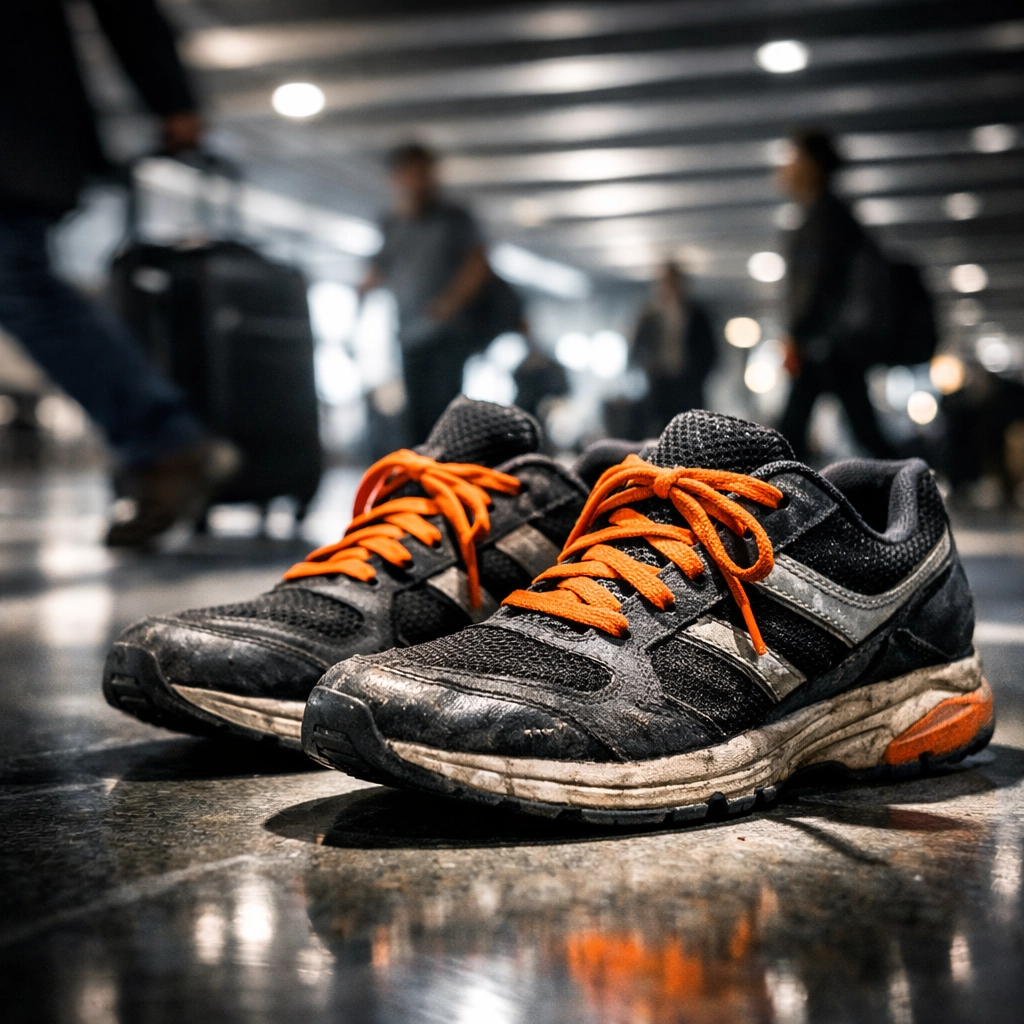
Your race shoes are sacred. They stay pristine until race morning. What you should travel in is a comfortable, broken-in pair that can handle airport miles, sightseeing, and maybe even a light jog if you need to loosen up.
Think of them as your "travel beaters": a reliable pair of daily trainers that won't let you down. Bonus points if they're stylish enough that you don't look like you just rolled out of a high school gym class.
And if you're checking a bag? Pack your race shoes in your carry-on. Airlines lose luggage. Don't let your perfectly-worn-in marathon shoes become a casualty.
Hydration Is Non-Negotiable
Here's a fun fact: airplane cabins have humidity levels lower than the Sahara Desert. Around 10-20%, to be exact. That means you're basically dehydrating the second you step on the plane.
And dehydration isn't just about feeling thirsty. It impacts circulation, energy, digestion, and recovery. All things you desperately need working properly before a marathon.
The fix:
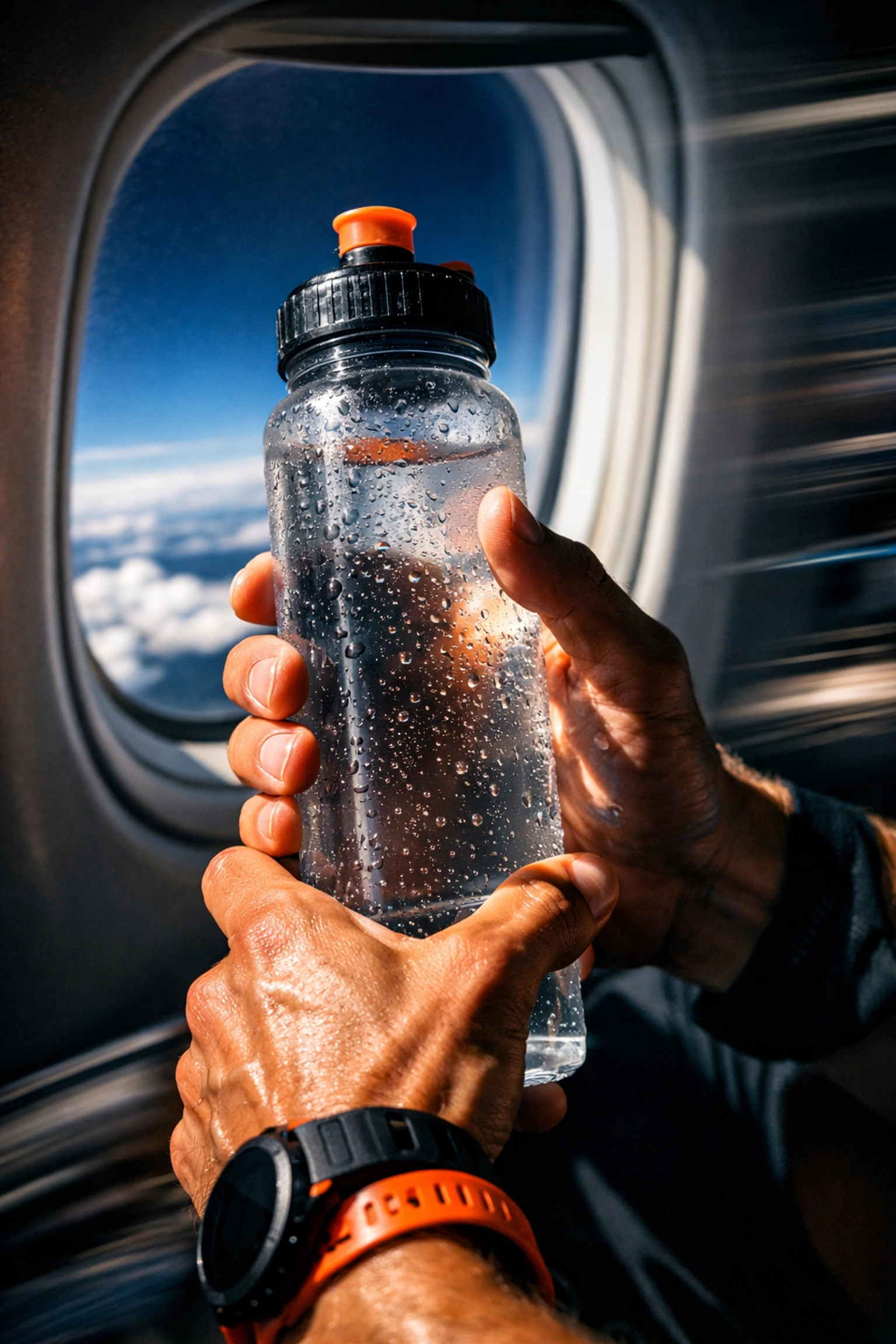
Bring an empty water bottle through security and fill it up at a fountain before boarding
Drink consistently throughout your flight: not just when they come around with the beverage cart
Skip (or limit) alcohol and caffeine, both of which dehydrate you further
Consider electrolyte packets to add to your water for better absorption
When you land, keep the hydration train going. Your body is already playing catch-up from the flight. Don't make it work harder.
The Gel and Nutrition Game Plan
Let's be honest: airport food is a minefield. Overpriced, underwhelming, and rarely aligned with your pre-race nutrition goals. But you still need to eat, and you need to eat smart.
Pack snacks. Good ones. Think:
Energy bars (the kind you've already tested and know won't upset your stomach)
Nut butter packets
Bananas or apples
Trail mix (easy to carry, won't go bad)
And here's where your race gels come in. If you're traveling with gels for race day, keep them in your carry-on. Don't risk them getting lost in checked luggage, and definitely don't wait until the day before the race to buy them in an unfamiliar city. You want the brand and flavor you've trained with. Your gut doesn't need surprises at mile 18.
Also? Test your gels during training. Not on race day. Not on the plane. During training. This isn't the time for experimentation.
The Community Aspect
One of the coolest parts of destination races? The community. You start seeing familiar faces in the airport, the hotel lobby, the expo. There's this unspoken camaraderie among people who've traveled to test themselves against 26.2 miles.
And when you show up looking put-together: rocking that runner aesthetic even in transit: you signal that you're part of the tribe. It's an instant icebreaker. Conversations start. Tips get shared. Nerves get calmed.
The running community is built on shared suffering, sure. But it's also built on shared joy. And that joy starts before the starting line. It starts in the journey.
Putting It All Together
So what does the ideal marathon travel setup actually look like?
The Outfit:
Moisture-wicking joggers or leggings
Breathable tee or long-sleeve
Lightweight jacket
Compression socks
Comfortable, broken-in sneakers (not your race shoes)
The Carry-On:
Race shoes (protected and safe)
Race day outfit and bib (just in case checked luggage goes rogue)
Water bottle
Electrolyte packets
Pre-tested energy bars and snacks
Race gels (the ones you've already practiced with)
The Mindset:
You're an athlete on a mission
You're part of a global community doing hard things
You're going to arrive ready: not wrecked
Looking good isn't vanity. It's strategy. It's a signal to yourself and everyone around you that you're serious. That you've prepared. That you belong.
And when you step off that plane or train, feeling fresh, hydrated, and ready to move, you're already ahead of the game. Because half the battle of a destination marathon isn't the race itself: it's showing up in a state where your body can actually perform.
So travel smart. Travel stylish. And most importantly? Travel like the runner you are.
Need more tips on staying consistent and injury-free all season? Check out our proven framework here.


Comments